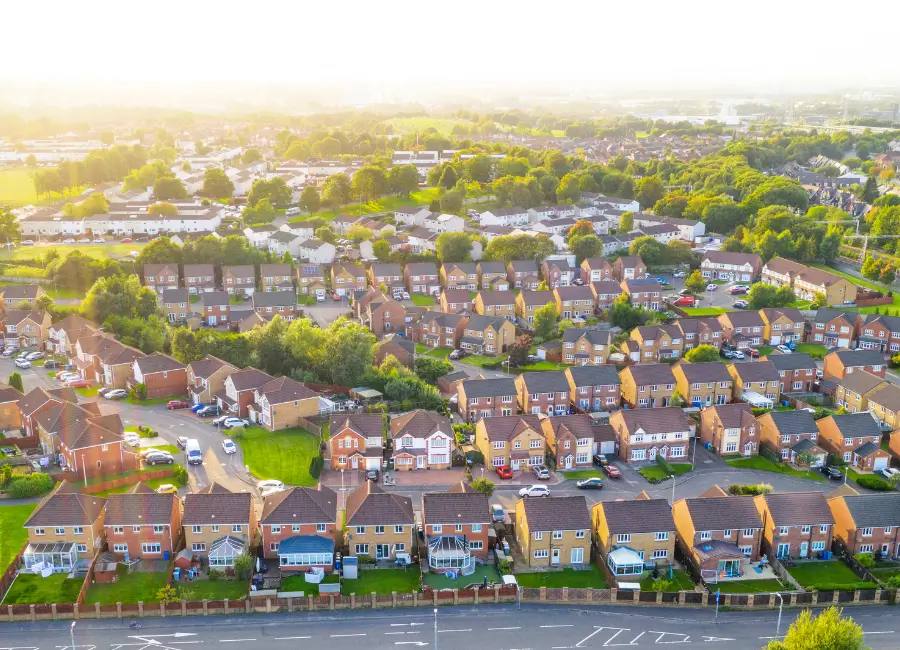
New apartment construction starts have fallen more than 40% since 2023, to the lowest level since 2016.
In Q1 2026, deliveries dropped 30% quarter-over-quarter. Multifamily permits are down 18% as developers pause across the board.
The supply cliff has arrived. And for investors who understand what that means, the next 18 months look very different than the headlines suggest.
The Oversupply Story Everyone Knows, And Why It Misses the Point
The narrative dominating multifamily conversations right now is oversupply.
- Austin's inventory has grown 32% since 2023.
- Phoenix added enough units to push vacancy near 3% above equilibrium.
- Dallas-Fort Worth is sitting at a 12.6% vacancy rate, a 20-year high.
- Houston is at 12.9%.
These numbers are real, and they are weighing on near-term rent growth.
But experienced real estate investors do not buy a market based on where rents are today. They buy based on where rents will be when they exit.
The oversupply that created today's vacancy pressure was built from projects started in 2021, 2022, and early 2023, during a brief window when financing was cheap and demand projections were euphoric.
That window closed hard. New starts collapsed. The pipeline that feeds future deliveries is draining fast.
What comes after a supply cliff is not more pain. It is pricing power.
You can also read: How Can Investors and Developers Partner the Right Way?
The Math Behind the Opportunity
Yardi Matrix data shows U.S. multifamily completions at 508,000 units in 2025, dropping to an estimated 371,000 in 2026, and bottoming near 327,000 in 2027.
That is a 35% reduction in new supply over two years, happening while population growth and household formation in Sun Belt metros continue at a pace that outstrips the rest of the country.
Sun Belt renter migration is still accelerating in 2026. DFW absorbed 24,280 units in the last measured period, a figure most markets in the country cannot touch.
The demand is not broken. It is being temporarily masked by the final wave of a construction cycle that has already ended.
Most forecasters now expect absorption to overtake deliveries in high-supply Sun Belt markets in the second half of 2026.
Rent growth is projected to return, modestly at first, by late 2026, with more meaningful compression in vacancy through 2027. Phoenix and Austin are projected to reach equilibrium by early to mid-2028.
The window between now and that recovery is where the acquisition opportunity lives.
You can also read: Interest Rates & Real Estate in 2026: How Smart Investors Are Adapting.
What Sellers Are Doing Right Now
When vacancy is elevated and rent growth is flat or negative, owners who took on floating-rate debt in 2021 and 2022 are under real pressure.
They are not in a position to wait for a 2027 recovery.
Bridge loans are maturing, debt service coverage ratios are tight, and equity returns have been compressed for two consecutive years.
That creates a motivated seller class that is actively repricing assets to move them.
In markets like DFW, Phoenix, and Houston, investors are finding opportunities at cap rates and price-per-unit figures that would have been impossible at any point between 2019 and 2023.
The distress is not uniform; it is concentrated in specific vintage years, specific submarkets, and specific capital structures.
For buyers who know where to look and how to underwrite, this is exactly the kind of market where generational buys get made.
You can also read: Commercial vs. Residential Real Estate ROI in 2026.
How to Underwrite the Recovery
The key discipline right now is not trying to catch the perfect bottom.
It is underwriting conservatively through the remaining supply absorption period and buying assets that pencil even if rents stay flat for another 12 months.
In DFW, submarkets like Frisco, McKinney, and parts of Fort Worth are absorbing faster than the metro average and will likely tighten before the headline number improves.
In Houston, the Energy Corridor and The Woodlands continue to attract employer demand that supports residential occupancy.
Also, in Phoenix, the Southeast Valley, Chandler, Gilbert, and Mesa have historically tightened faster than Tempe and downtown during recovery cycles.
Austin requires more patience. With inventory up 33% and vacancy still above 13%, the path to equilibrium runs through 2028.
That does not make it a bad investment, but it demands longer-dated underwriting and a capital structure that does not force a sale before the recovery.
The investors who will generate the best returns in this cycle are not the ones waiting for proof of recovery before acting.
By the time vacancy compression shows up in headlines, the pricing advantage will already be gone.
You can also read: $875B in CRE Debt Matures in 2026: Here is the Opportunity.
The Role of the Network in This Environment
This is not a market where you can win through information alone. The best deals in DFW, Houston, Phoenix, and Austin are not being broadly marketed.
They are being surfaced through relationships, investors who know which operators are under pressure, lenders who understand which loan maturities are coming, and brokers who work specific submarkets deeply enough to see off-market inventory before it ever hits a broker package.
That is the practical case for operating inside a network of people who are actively working these markets.
The investor who finds out about a distressed 180-unit asset in North Dallas three months before it is listed does not win because they had better analytical models. They win because someone in their network called them first.
REF was built for exactly this kind of environment, connecting investors, operators, lenders, brokers, attorneys, and CPAs across Sun Belt markets so that relationships can generate the deal flow that pure analysis never will.
If you are actively investing in multifamily and want to be inside the conversations happening in DFW, Austin, Houston, and Phoenix right now, join the REF community.