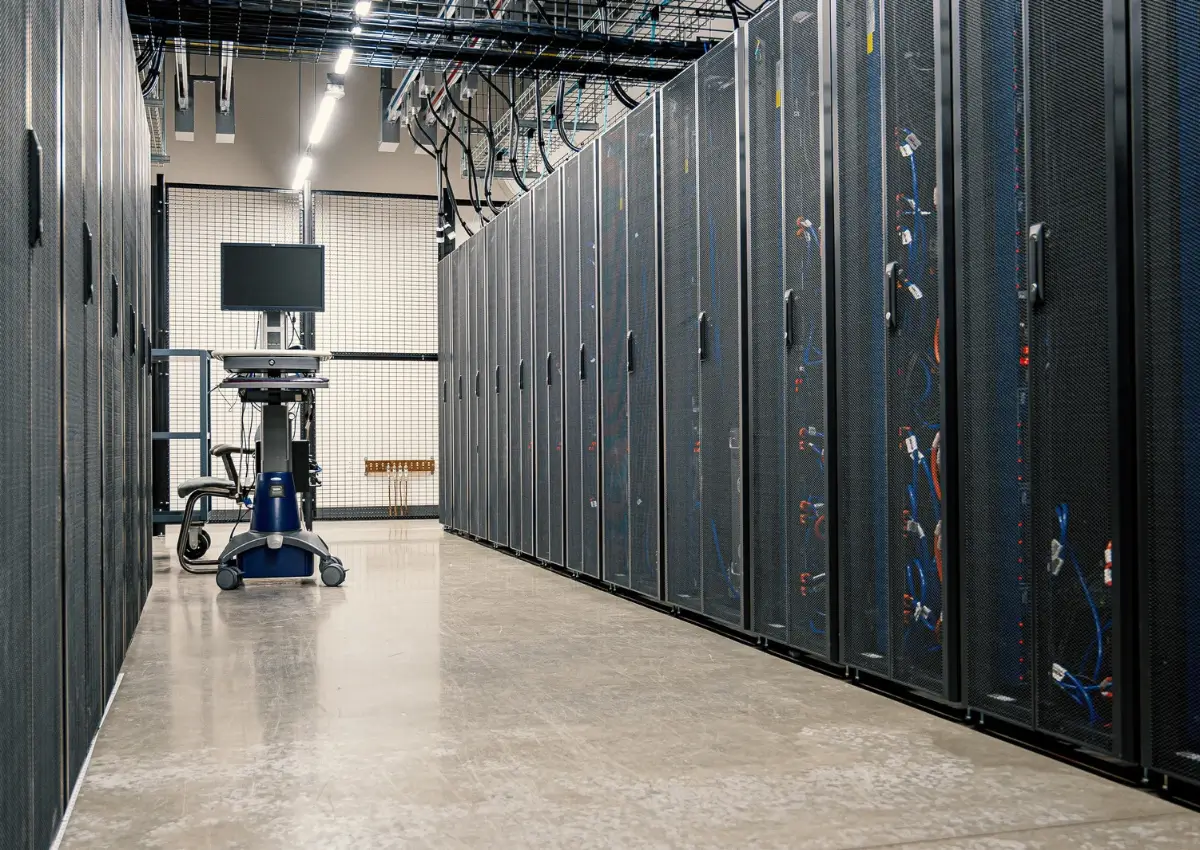
North Texas just quietly passed 1,400 megawatts of data center capacity and jumped two spots in the national rankings. For anyone who owns, brokers, or lends against industrial land in DFW, that changes what the dirt is actually worth.
For twenty years, the best industrial parcel in North Texas was the one closest to the highway. Good access to I-35, the Sam Rayburn Tollway, or the BNSF line meant a faster lease-up and a stronger rent roll.
That is still true for a warehouse. It is no longer true for the fastest-growing piece of DFW's industrial market.
Today the best parcel is the one closest to a substation with capacity to spare. Dallas-Fort Worth has become the third largest data center market in North America, and the properties sitting on usable power are trading like a different asset class from the acre a mile down the road with none.
If you are an investor, a landowner, a broker, or a lender working in DFW industrial, this is worth understanding before the next deal crosses your desk, because the diligence questions have changed even if the zoning map has not.
The Numbers Behind the Rush
The scale of what has happened in North Texas over the past year is easy to underestimate.
DFW's data center inventory topped 1,400 megawatts in the first half of 2026, up from just 563 megawatts in the same period a year earlier.
Under construction inventory is up 81 percent year over year, and 95 percent of the 765 plus megawatts currently being built is already preleased before a single tenant moves in.
Behind that is a pipeline that dwarfs what is already on the ground: roughly 13 gigawatts of total capacity planned or underway across North Texas, including 3.7 gigawatts of greenfield development that has not broken ground yet.
Hyperscaler leases backing this construction typically run 15 to 20 years, which is why lenders are willing to advance 50 to 65 percent of total project cost against a preleased, investment-grade tenant in a way they simply would not for a speculative industrial building.
This is not a niche trend inside DFW's industrial numbers. It is becoming a meaningful share of them.
You can also read: Insurance Is Now the Line Item That Kills Deals in 2026.
Why Power Beats Location
Here is the part that matters for anyone holding land: powered sites, meaning parcels with confirmed access to grid capacity, are trading nationally at 1.63 to 2.5 times the price of comparable unpowered industrial land.
In power-constrained markets, and ERCOT's North Texas footprint increasingly qualifies, that premium runs materially higher.
That means two landowners with identical acreage, identical zoning, and identical highway access can be sitting on assets worth very different amounts, and the only variable is which one has a usable interconnection position with the utility.
Access is becoming the new location.
You can also read: $875B in CRE Debt Matures in 2026: Here is the Opportunity.
The Grid Is the New Zoning Board
Entitlement used to be the long pole in a North Texas industrial deal: rezoning, platting, a city council vote.
Those steps still matter, but they are no longer what determines timeline or value on a power-hungry site.
ERCOT hit an all-time peak demand of 91,089 megawatts this July, and its own revised projection puts 2032 peak demand near 175,000 megawatts.
One megawatt covers roughly 250 homes at peak, which gives some sense of how much of that growth is coming from data centers rather than rooftops.
The practical result is that a site's place in the utility's interconnection queue now matters as much as its place in the city's entitlement process.
A parcel can be perfectly zoned and still be years from usable power, and a parcel with an active study underway can leapfrog land that looks better on paper.
You can also read: The Power Grid, Not Zoning, Is Now the Real Constraint on Industrial Land.
What This Means If You Are Not Building a Data Center
Not every reader of this is chasing a hyperscaler lease, and that is exactly why this matters more broadly.
Cushman and Wakefield's second quarter 2026 numbers show DFW industrial vacancy at 8.1 percent, down 110 basis points year over year, with net absorption of 9.0 million square feet in the quarter and 13.6 million square feet year to date.
Asking rents hit a new high of 9.19 dollars per square foot net, up 13.2 percent year over year, and big box vacancy is at its lowest level since 2022.
Data center demand is one of the drivers Cushman and Wakefield names alongside e-commerce for that tightening.
So even an investor with no interest in servers is competing for land, power, and construction capacity in a market where a growing slice of demand does not behave like traditional industrial demand at all.
You can also read: Alternative Lenders Took 53% of CRE Originations: What That Means for Your Next Deal.
How to Underwrite a Powered Land Deal
If a powered land or data center adjacent deal lands on your desk, the diligence list looks different from a standard industrial acquisition.
Confirm the interconnection queue position and the status of the utility's study, not just the zoning entitlement. Check actual available capacity at the nearest substation rather than assuming proximity equals access.
Understand who the tenant is and how long the lease runs, since a 15 to 20-year hyperscaler lease underwrites nothing like a typical five-year industrial tenant.
Ask how a lender is sizing the deal, because 50 to 65 percent advance rates against investment-grade, preleased income look nothing like spec industrial financing terms.
And price in construction reality: North Texas data center construction is running 1,000 to 1,500 dollars per square foot, which is exactly why the land under a stabilized facility commands such a premium long before anyone breaks ground.
You can also read: 100% Bonus Depreciation Is Permanent: What CRE Investors Need to Know.
Where the Real Edge Comes From
None of this information is secret, but almost none of it sits with one person.
The utility contact who knows which substation actually has headroom, the broker who knows which landowner is already three years into an interconnection study, the lender who has actually sized a hyperscaler-backed loan, and the developer who has built at 1,200 dollars a foot in Alliance rarely sit in the same room until someone puts them there.
That is the room Real Estate Forum (REF) exists to create.
Whether you are sitting on land you did not know was powered, chasing a deal that depends on a queue position, or trying to find the right capital partner for a build that does not look like a normal industrial project, the fastest way to the right person in DFW real estate is still another person who already knows them.
Join REF and connect with the developers, brokers, lenders, and landowners who are already working this market in real time.